
Robotics in Hospitals: Infrastructure Requirements for the Next Generation of Healthcare
Healthcare is entering a new era where robotics is revolutionizing patient care, surgical precision, and hospital operations. From robotic-assisted surgeries and automated pharmacy systems to autonomous delivery robots and rehabilitation devices, robotics is becoming an essential part of modern healthcare infrastructure.
However, adopting robotic technologies requires more than purchasing advanced equipment. Hospitals must be designed with the right infrastructure to support these systems safely, efficiently, and sustainably. Proper planning ensures seamless integration, improved workflows, and enhanced patient outcomes.
This blog explores how robotics is shaping healthcare and the infrastructure hospitals need to prepare for the future. At Hospitals Infra, we help healthcare organizations build intelligent, technology-enabled facilities through innovative planning and engineering solutions.
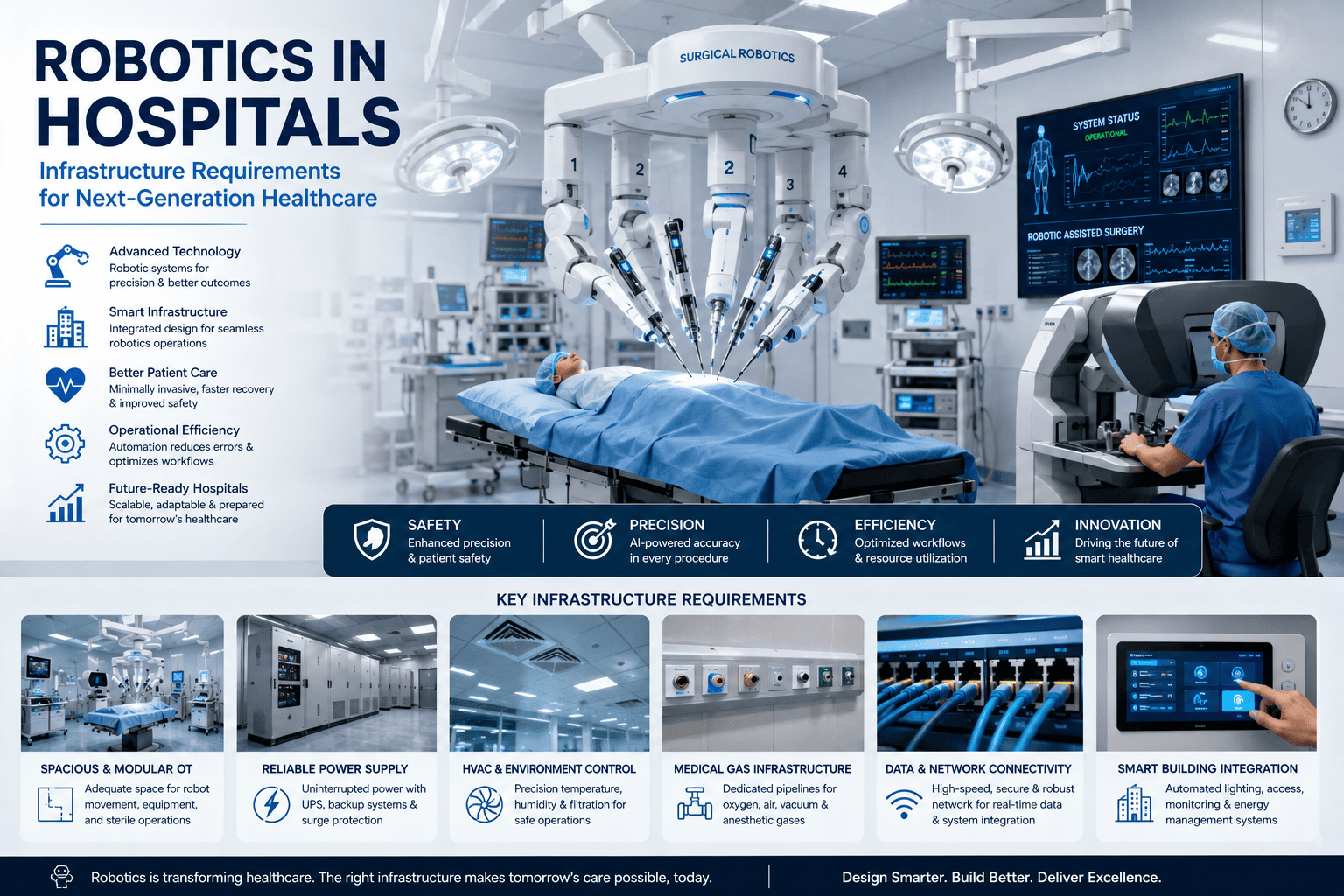
Why Robotics Matters in Modern Hospitals
Healthcare robotics improves surgical precision, automates repetitive hospital tasks, enhances patient safety, reduces operational costs, and creates future-ready healthcare environments capable of meeting growing medical demands.
Why Robotics is Transforming Healthcare
Hospitals around the world are embracing robotics to improve clinical outcomes, optimize workflows, and support healthcare professionals. Robotic technologies reduce human error while increasing accuracy, consistency, and operational efficiency across various hospital departments.
As patient volumes continue to rise, robotics enables hospitals to deliver faster, safer, and higher-quality healthcare services while making better use of available resources.
Key Advantages of Healthcare Robotics
- Greater surgical precision
- Faster patient recovery
- Reduced infection risks
- Improved workflow efficiency
- Better resource utilization
- Enhanced patient safety
- Increased staff productivity
Hospitals investing in robotics today are building facilities capable of meeting the growing demands of modern healthcare while preparing for future technological advancements.
Learn more about our Hospital Planning, Hospital Architecture, and Hospitals Infra services for designing intelligent healthcare facilities.
Types of Robotics Used in Hospitals
Healthcare robotics supports multiple hospital departments by improving efficiency, reducing manual workloads, and enhancing patient care. From surgery to logistics and rehabilitation, robotic technologies are becoming an integral part of next-generation healthcare infrastructure.
1. Robotic-Assisted Surgery
Robotic surgical systems enable surgeons to perform minimally invasive procedures with greater precision, flexibility, and control. These advanced systems improve surgical accuracy while reducing patient recovery time and post-operative complications.
Common Medical Specialties
- Cardiac Surgery
- Urology
- Orthopedics
- Gynecology
- General Surgery
- Neurosurgery
Benefits
- Smaller incisions
- Reduced blood loss
- Faster recovery
- Lower complication rates
- Improved surgical outcomes
Our Modular Operation Theatre solutions are designed to support advanced robotic-assisted surgical systems and future-ready operation theatres.
2. Autonomous Delivery Robots
Autonomous delivery robots transport medicines, laboratory samples, meals, linens, and medical supplies throughout hospitals without human intervention. These systems reduce staff workload while improving operational efficiency.
Advantages
- Reduced staff workload
- Faster internal deliveries
- Improved hospital logistics
- Better inventory management
- Higher operational efficiency
3. Robotic Pharmacy Systems
Automated pharmacy robots improve medication dispensing by accurately sorting, storing, and preparing prescriptions. These intelligent systems reduce medication errors, improve inventory management, and allow pharmacists to focus more on patient care.
Benefits of Robotic Pharmacy Systems
- Fewer medication errors
- Faster prescription dispensing
- Better inventory control
- Improved patient safety
- Reduced manual workload
- Enhanced pharmacy efficiency
4. Rehabilitation Robots
Rehabilitation robotics assists patients recovering from strokes, neurological disorders, spinal cord injuries, and orthopedic surgeries. These robotic systems provide personalized therapy sessions while tracking patient progress and improving rehabilitation outcomes.
Rehabilitation Robotics Supports
- Guided physical therapy
- Neurological rehabilitation
- Stroke recovery programs
- Orthopedic rehabilitation
- Progress monitoring
- Personalized treatment plans
5. Disinfection Robots
Autonomous UV-C disinfection robots help hospitals maintain high hygiene standards by automatically disinfecting patient rooms, operation theatres, ICUs, and other high-risk clinical areas. These systems significantly reduce healthcare-associated infections while improving cleaning consistency.
Benefits of Disinfection Robots
- Reduced healthcare-associated infections
- Improved infection prevention
- Consistent cleaning standards
- Enhanced patient safety
- Safer environments for healthcare professionals
Robotics is Shaping the Future of Healthcare
From robotic-assisted surgeries to autonomous hospital logistics and intelligent rehabilitation systems, robotics is transforming healthcare delivery by improving precision, efficiency, patient safety, and overall hospital performance.
Infrastructure Requirements for Robotic Hospitals
Implementing robotics successfully requires hospitals to invest in advanced infrastructure capable of supporting intelligent technologies. Proper planning ensures robotic systems integrate seamlessly into hospital operations while maintaining reliability, scalability, and long-term performance.
1. Flexible Hospital Planning
Hospitals should be designed with adaptable layouts that support future robotic technologies without requiring major structural changes. Flexible planning enables healthcare facilities to accommodate new equipment as technology evolves.
Planning Should Include
- Expandable operation theatres
- Flexible utility systems
- Modular treatment rooms
- Future-ready infrastructure
- Scalable clinical departments
Our Hospital Planning services help healthcare organizations develop intelligent hospitals ready for future innovations.
2. Robust Digital Network
Healthcare robotics depends on secure, high-speed digital connectivity. Robotic systems communicate continuously with Electronic Health Records (EHR), imaging systems, laboratory software, cloud platforms, and hospital information systems.
Essential Network Components
- High-speed internet connectivity
- Fiber-optic backbone infrastructure
- Wi-Fi 6/6E coverage
- Low-latency communication
- Secure cloud integration
- Network redundancy
Reliable networking ensures uninterrupted robotic performance while supporting real-time clinical decision-making and operational efficiency.
3. Advanced Electrical Infrastructure
Robotic healthcare equipment requires a stable, uninterrupted power supply to ensure safe and reliable operation. Even brief power interruptions during robotic-assisted procedures can impact patient safety and hospital operations.
Essential Electrical Requirements
- Dedicated electrical circuits
- Uninterruptible Power Supply (UPS)
- Emergency backup generators
- Power monitoring systems
- Surge protection
- Redundant power distribution
Reliable electrical infrastructure minimizes downtime and ensures robotic systems continue operating during emergencies and critical medical procedures.
4. Smart Operation Theatre Design
Robotic-assisted surgeries require operation theatres specifically designed to support sophisticated robotic equipment. Modern operation theatres must provide sufficient floor space, integrated imaging systems, ergonomic layouts, and efficient cable management for safe surgical workflows.
Key Design Considerations
- Expanded floor space
- Ceiling-mounted equipment
- Integrated imaging systems
- Advanced surgical lighting
- Sterile workflow planning
- Efficient cable management
Explore our Modular Operation Theatre solutions designed for advanced robotic-assisted surgeries and next-generation healthcare facilities.
5. Data Centers and Cybersecurity
Robotic hospital systems generate and process massive amounts of sensitive healthcare data. Hospitals must invest in secure digital infrastructure to protect patient information while maintaining uninterrupted robotic operations.
Hospitals Should Invest In
- Secure data centers
- Encrypted communications
- Automated backup systems
- Cybersecurity monitoring
- Controlled user access
- Disaster recovery planning
6. Medical Equipment Integration
Robotic systems must seamlessly integrate with other hospital technologies to maximize operational efficiency and improve clinical decision-making. Integration enables real-time communication between different healthcare platforms.
Integrated Systems Include
- Electronic Health Records (EHR)
- Medical imaging systems
- Laboratory Information Systems
- Pharmacy management software
- Hospital Information Systems (HIS)
- AI-powered analytics platforms
7. HVAC and Environmental Controls
Sensitive robotic equipment performs best in carefully controlled environments. Proper HVAC systems help maintain equipment performance while supporting infection prevention and patient safety.
Environmental Controls Include
- Stable room temperatures
- Humidity control
- HEPA filtration systems
- Positive and negative pressure rooms
- Clean air standards
- Continuous environmental monitoring
Building Hospitals for the Future
Successful robotic hospitals combine intelligent infrastructure, advanced engineering, secure digital networks, reliable power systems, and flexible clinical spaces to support continuous innovation in healthcare delivery.
Benefits of Robotic Hospital Infrastructure
Hospitals implementing robotics and intelligent infrastructure gain significant advantages in patient care, operational efficiency, clinical precision, and long-term sustainability.
Key Benefits
- Improved patient outcomes
- Higher surgical accuracy
- Reduced hospital stays
- Faster diagnostics
- Better infection control
- Lower operational costs
- Improved workflow efficiency
- Higher patient satisfaction
- Increased staff productivity
- Future-ready healthcare facilities
Learn more about our Medical Equipment Planning services that help hospitals integrate advanced technologies into modern healthcare infrastructure.
Challenges of Implementing Robotics
Although robotics offers significant advantages, hospitals should carefully plan for infrastructure upgrades, technology integration, cybersecurity, staff training, and long-term maintenance to maximize return on investment.
Common Challenges
- High initial investment
- Technology integration complexity
- Staff training requirements
- Maintenance costs
- Cybersecurity risks
- Regulatory compliance
- Infrastructure modernization
Future Trends in Healthcare Robotics
Healthcare robotics continues to evolve rapidly with advancements in Artificial Intelligence, automation, machine learning, and Internet of Things (IoT). Hospitals designed today should be capable of supporting future robotic innovations while remaining flexible for emerging healthcare technologies.
Emerging Robotics Trends
- AI-assisted robotic surgery
- Collaborative robots (Cobots)
- Autonomous patient transport systems
- Robotic telemedicine
- Smart rehabilitation devices
- AI-powered diagnostics
- Remote robotic procedures
- Predictive maintenance using IoT
Healthcare facilities that adopt scalable robotic infrastructure today will remain competitive, efficient, and prepared for the future of modern medicine.
Best Practices for Planning a Robotic Hospital
Successful robotic hospital projects require comprehensive planning, modern engineering, digital infrastructure, and collaboration with experienced healthcare consultants.
Best Practices Include
- Conduct detailed infrastructure assessments
- Plan for scalable technology adoption
- Invest in secure digital networks
- Ensure uninterrupted power supply
- Design flexible clinical spaces
- Prioritize cybersecurity
- Train healthcare professionals
- Partner with experienced healthcare infrastructure consultants
Expert Insight
Hospitals that invest in robotic-ready infrastructure today will improve patient outcomes, increase operational efficiency, strengthen safety, and create intelligent healthcare environments capable of adapting to tomorrow’s medical innovations.
Frequently Asked Questions
Find answers to the most common questions about robotics in hospitals and healthcare infrastructure.
Healthcare robotics involves using robotic systems to assist with surgeries, logistics, rehabilitation, pharmacy operations, and infection control within hospitals.
Robotic systems require reliable power, secure digital connectivity, optimized operation theatres, environmental controls, and integrated healthcare technologies for safe and efficient performance.
Robotic-assisted surgery offers greater precision, smaller incisions, reduced blood loss, faster recovery, lower complication rates, and improved patient outcomes.
No. Hospitals of every size can implement robotic technologies based on their specialties, patient volumes, and long-term infrastructure plans.
Robots automate repetitive tasks, streamline workflows, reduce errors, improve logistics, and allow healthcare professionals to focus more on patient care.
Hospitals should evaluate infrastructure readiness, technology integration, cybersecurity, staff training, maintenance requirements, regulatory compliance, and future scalability.
Helpful Resources
Conclusion
Robotics is redefining healthcare by improving surgical precision, hospital efficiency, patient safety, and operational performance. However, the full benefits of robotic technologies can only be realized through well-planned healthcare infrastructure that includes advanced digital networks, reliable power systems, smart operation theatres, and integrated medical technologies.
As hospitals continue embracing automation and Artificial Intelligence, investing in robotic-ready infrastructure today will prepare healthcare facilities for tomorrow’s innovations. Partner with Hospitals Infra to build intelligent healthcare environments that deliver safer, smarter, and more efficient patient care. For expert guidance, Contact Us today.